$ cd ~/projects/shuffle-box
> Shuffle Box_
Aug 2023 - Jul 2024
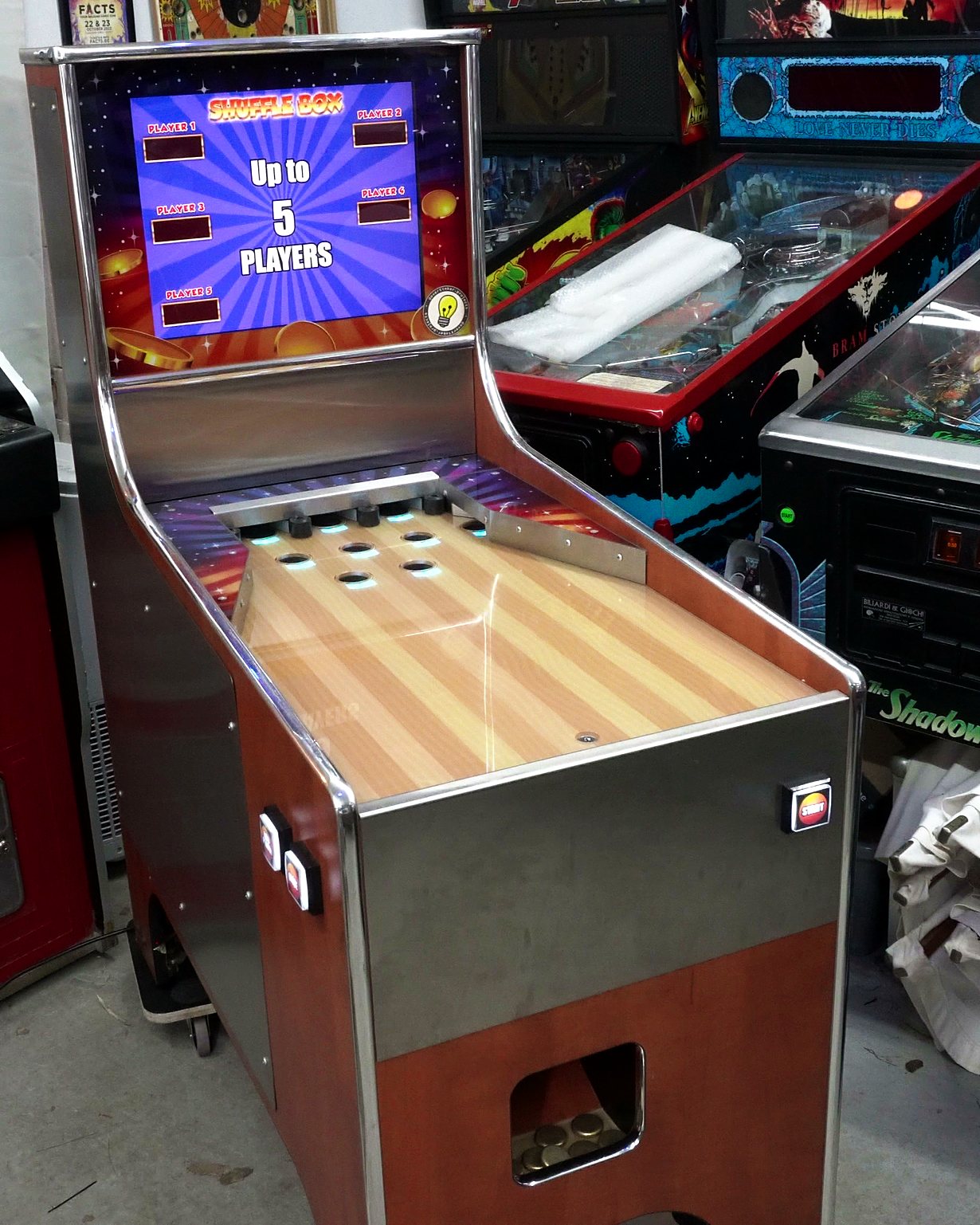
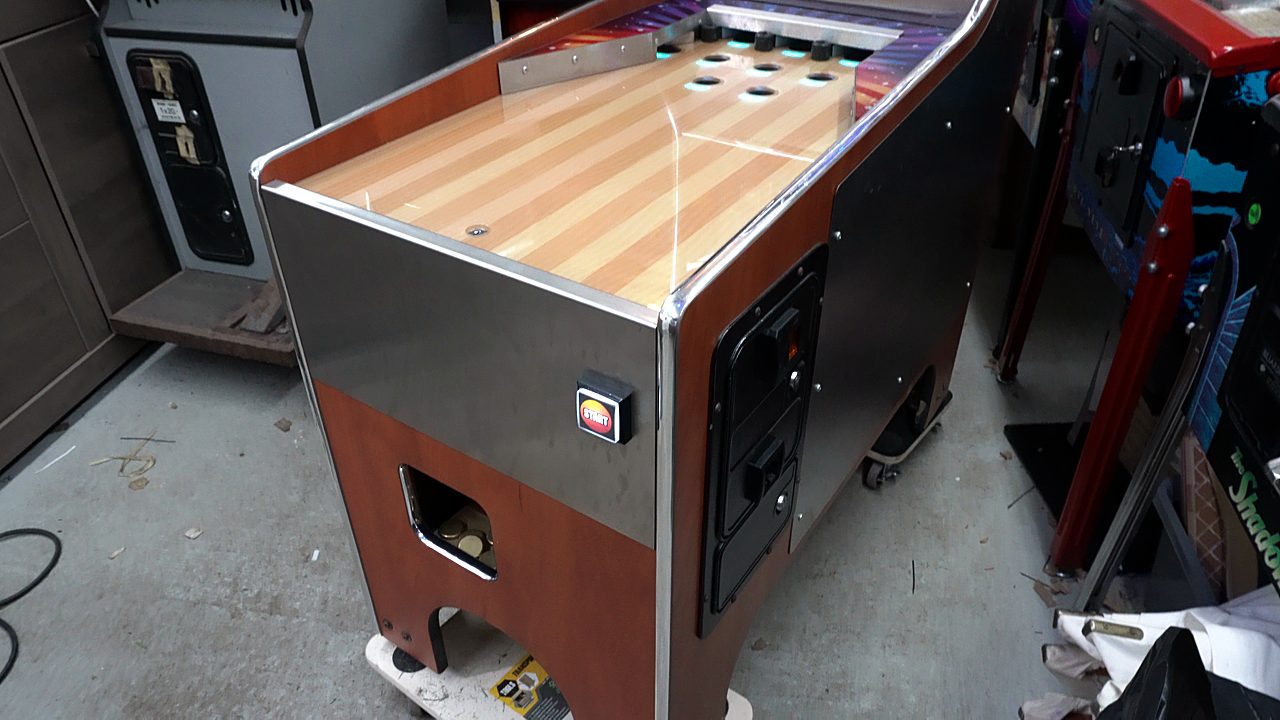
The Shuffle Box is a rare Belgian arcade game. It grew out of an old folk game called bakschieten, where you throw metal coins into a wooden box. Around 2010 the Flemish company Erron turned it into a coin-op machine, with a screen, LEDs next to the holes and different game modes. It was not popular enough, so production stopped. The factory was left with several cabinets that never got any electronics.
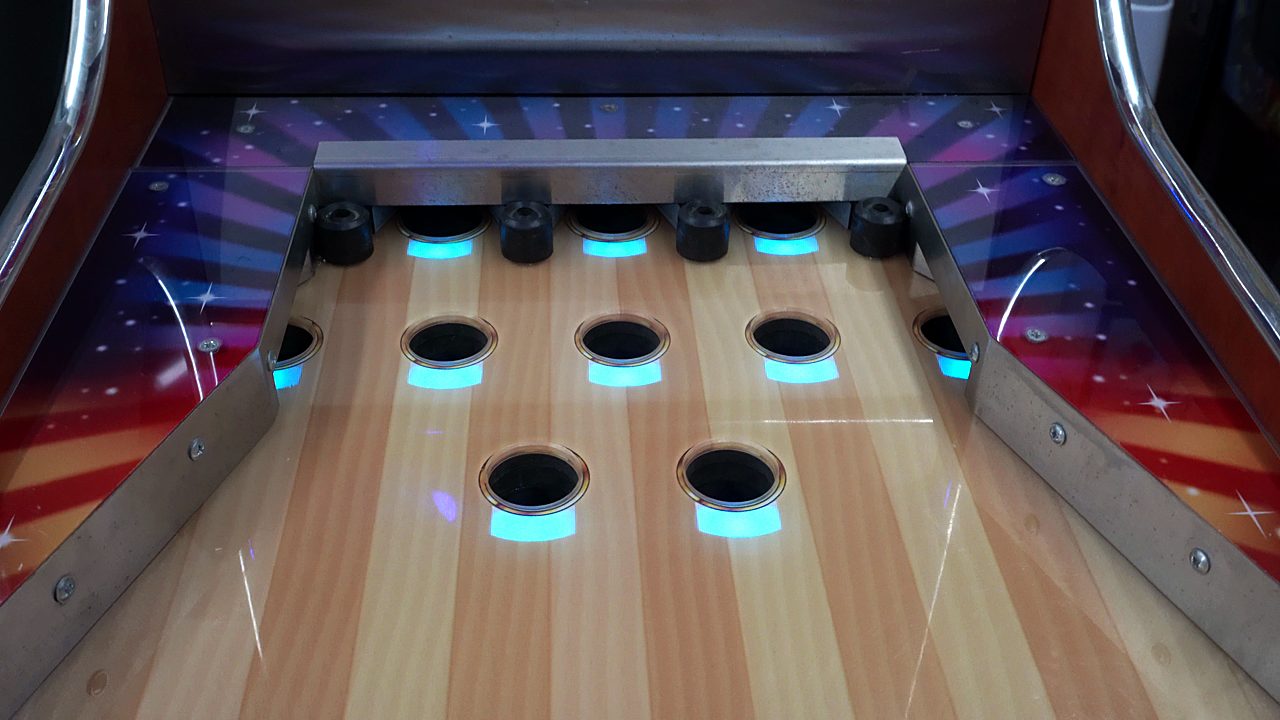
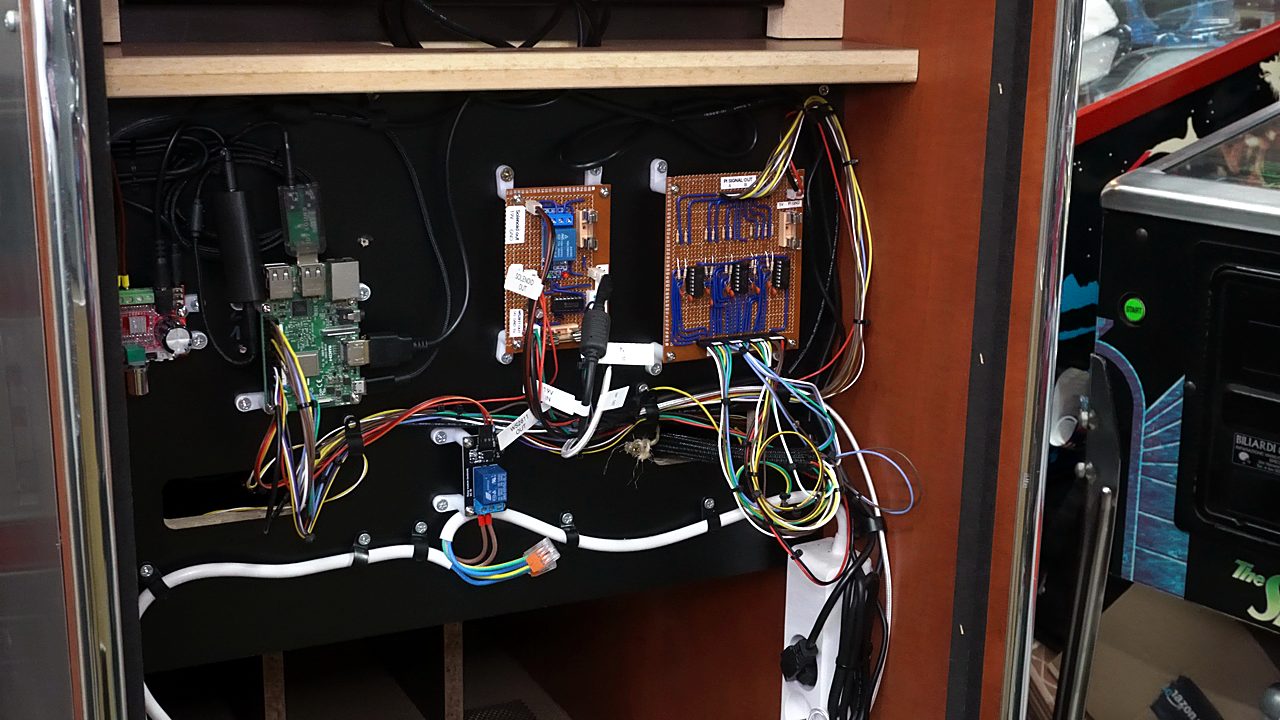
I tracked one of those down, and gave it electronics and software from scratch. There were no manuals or schematics, only a few photos from an advert. A Raspberry Pi 3B+ runs everything: the 19" screen, the buttons, 10 hole sensors, addressable RGB LEDs, a speaker and a solenoid that releases the coins.
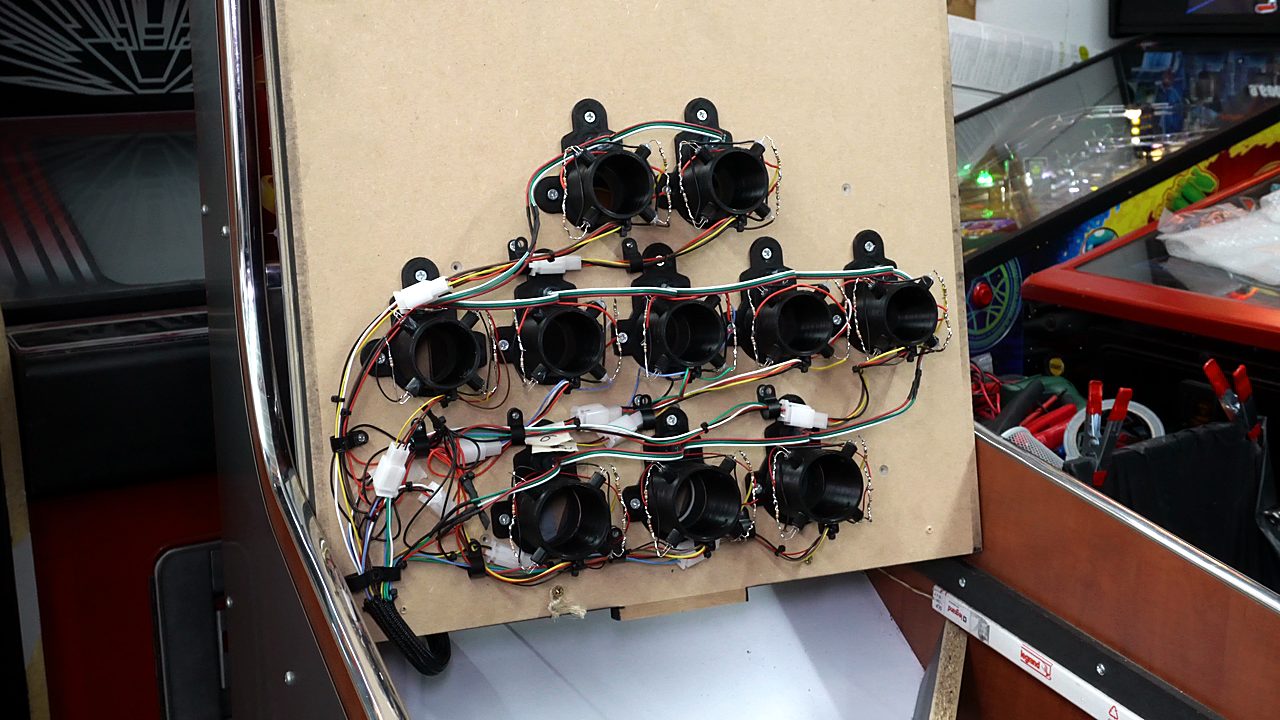
Each hole has a 3D printed chute with two infrared beam break sensors, so a coin dropping through is detected. I soldered all 10 sets by hand, and wired them to a perfboard that combines each pair of beams into one signal for the Pi. The solenoid pulls back a plastic divider inside the cabinet, to release the coins when a game starts. Doing all of this without PCBs cost me a lot of time, so next time I might challenge myself to design PCBs.
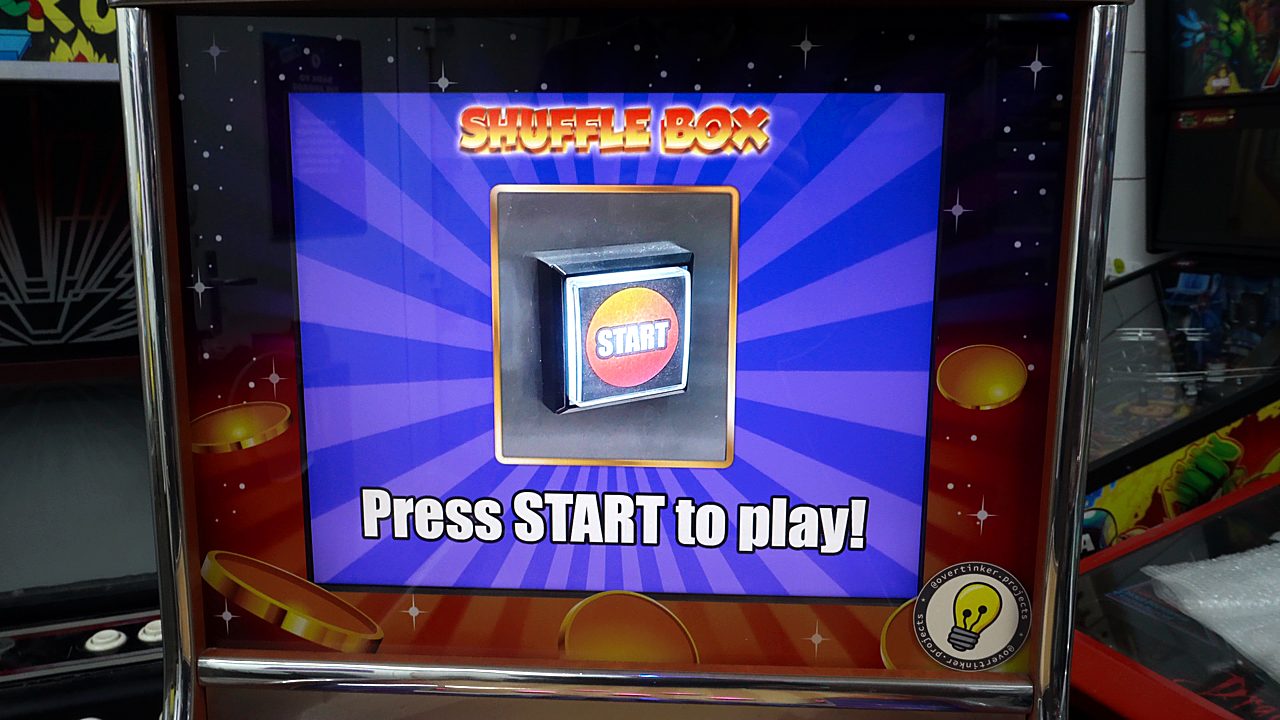
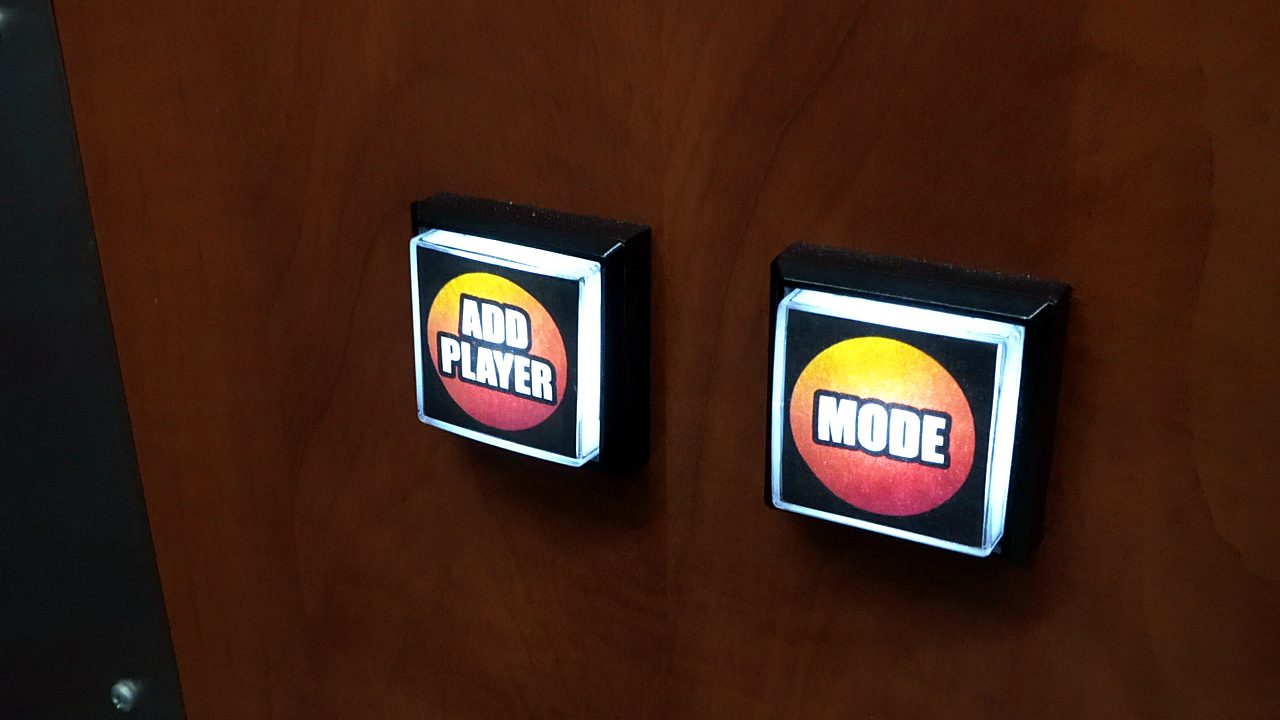
The game itself is written in Python with Pygame, with a background I redrew from the advert. Up to 5 players can play, and there are 4 game modes: Classic, Plus Minus (some holes deduct points), Collect All and Roving (the scoring holes change every round). When nobody plays, an attract mode cycles through animations.
I documented the whole build in a video on my Overtinker YouTube channel, and I was lucky enough to bring the finished game to my local Maker Faire.